Catania, Sicily: with five days to spare, you finally don't have to rush anymore. Four days are enough for the old town and Etna, that's true, but with one extra day you start doing things properly. You have time to take in the city slowly, to enjoy Etna without watching the clock, and above all to treat yourself to a day trip that is worth the journey all on its own: Syracuse. It's that extra half day that turns a good holiday into one you'll carry with you for years.
I'm Fabio, I live in Catania and I host the people who come here in my loft in the old town. Over the years I've seen hundreds of people pass through, and the ones who stay five days are always the most relaxed. Let me tell you how I'd spend these five days myself, mixing the city, the mountain, the sea and the baroque of the Val di Noto.
Days 1 and 2: the old town and Etna
The short answer is this: spend the first day exploring the old town on foot and the second on Etna, so you settle straight into the right rhythm. These are the two things you absolutely can't skip, and getting them done in the first two days leaves the rest of the week free for day trips.
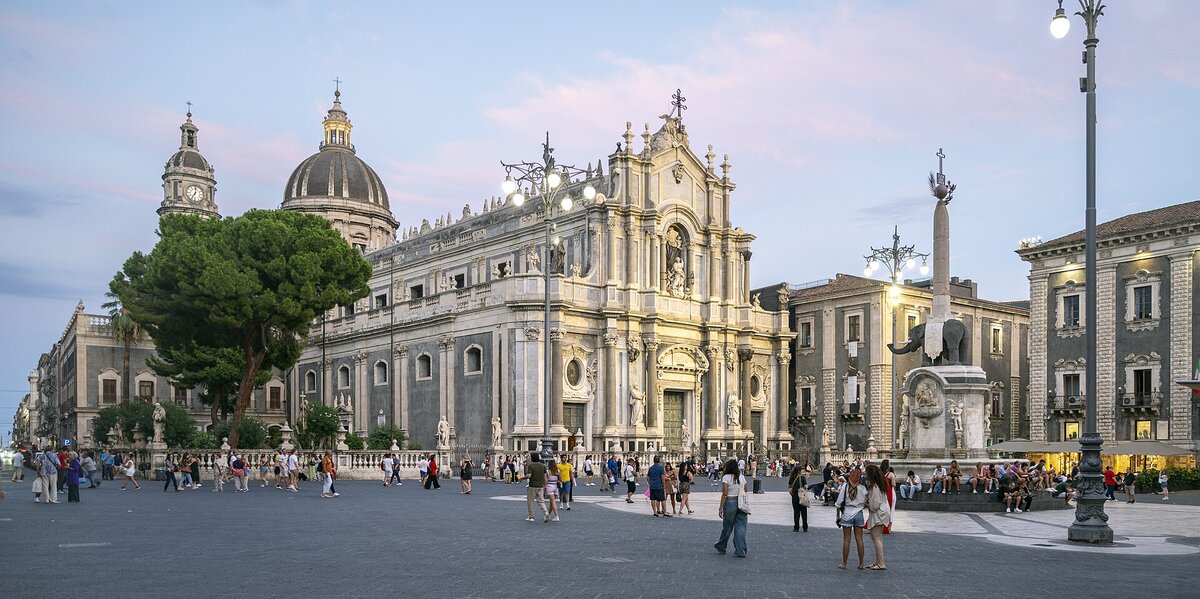
The first day you spend entirely inside the city. Start from Piazza del Duomo, Catania's drawing room, with the Elephant Fountain in the middle. It's our symbol, in dialect we call it "u Liotru", and you'll find it on the city's coat of arms too. From there you're a stone's throw from the fish market, which in the morning is a spectacle of voices, ice and counters piled with stuff caught only a few hours earlier. Go early, around 8 or 9, when it's in full swing.
After the fish market, head up to the Benedictine Monastery, one of the largest monasteries in Europe, today home to the university. The guided tour costs around 8 euros and lasts a good hour. Then lose yourself along Via Etnea, the street for shopping and strolling, with Etna always there at the end as your backdrop. Close the day with an aperitivo in Piazza Università and a dinner of pasta alla Norma, the Catania dish par excellence.

Fabio's tip
A tip from someone who lives here: in the evening downtown, don't necessarily book ahead. Take a wander among the tables of Via Gemmellaro and around there about 8:30 pm, see where there's a buzz of locals and sit down there. The best places often don't even have a menu in English.
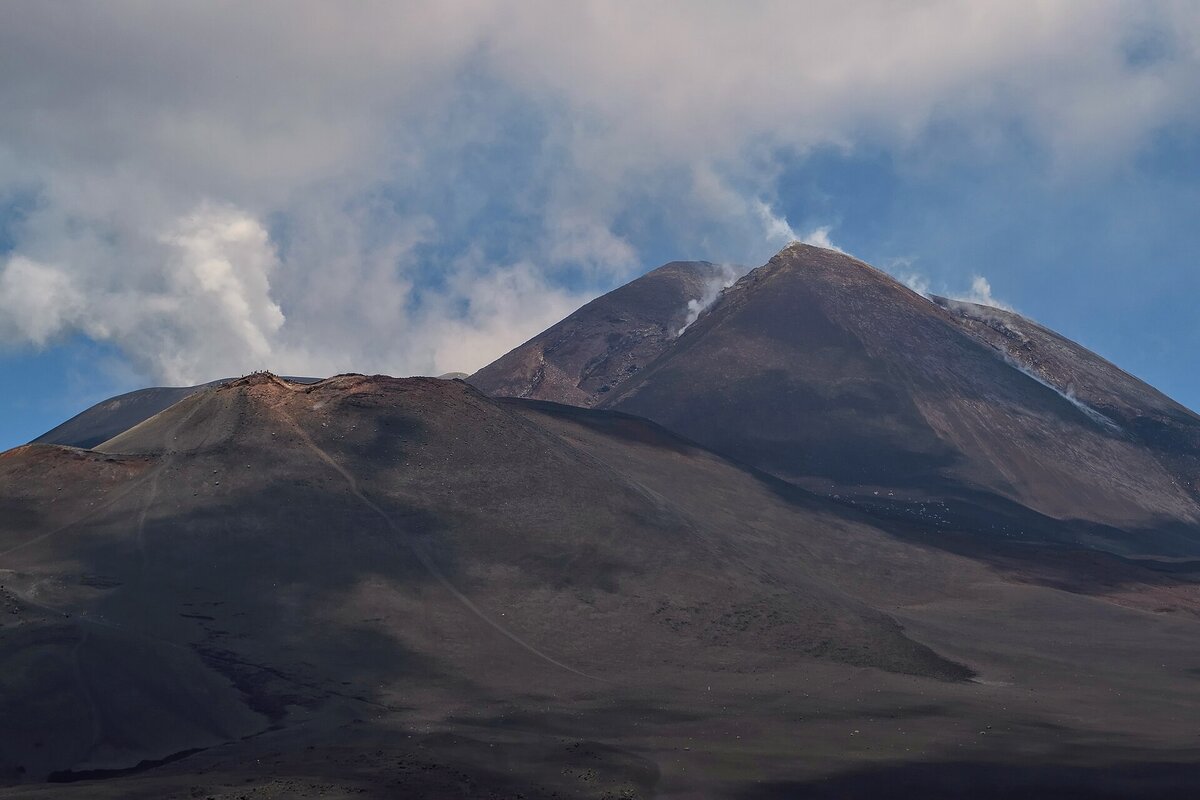
The second day is dedicated to Etna, the highest active volcano in Europe and the reason half of eastern Sicily has such fertile soil. The easiest way without a car is the AST bus, which leaves from Via Etnea, in front of the station, around 8:15 in the morning. The return ticket costs a few euros and in an hour and a half it takes you to Rifugio Sapienza, at 1,900 metres.
From there you walk to the Silvestri Craters, dormant craters you can wander around on the black lava sand. Even at this altitude the view is breathtaking. If you want to climb higher, towards 2,900 metres, there's the cable car plus the off-road vehicle, but it costs quite a bit (around 65 euros) and for a first time the Silvestri Craters are more than enough. On the way back, stop at one of the wineries on the slopes of the volcano for a tasting: Etna wines like Nerello Mascalese have become famous all over the world, and drinking a glass while looking at the mountain that gave birth to them is an experience in itself.
If you want to dig deeper into these first two days with more detail, I've written a dedicated guide on what to do in Catania in 4 days where I cover the city and the volcano at a relaxed pace.
Day 3: Syracuse and Ortigia
The short answer is this: catch the train early in the morning and spend the whole day between Ortigia and the Neapolis Archaeological Park, it's the day trip anyone coming to Catania should make.
Syracuse is about 60 km from Catania and you can get there comfortably by train: from Catania's Stazione Centrale it takes about an hour and the ticket costs around 7 euros. No worrying about parking, no traffic, you step off and you're practically in town already.
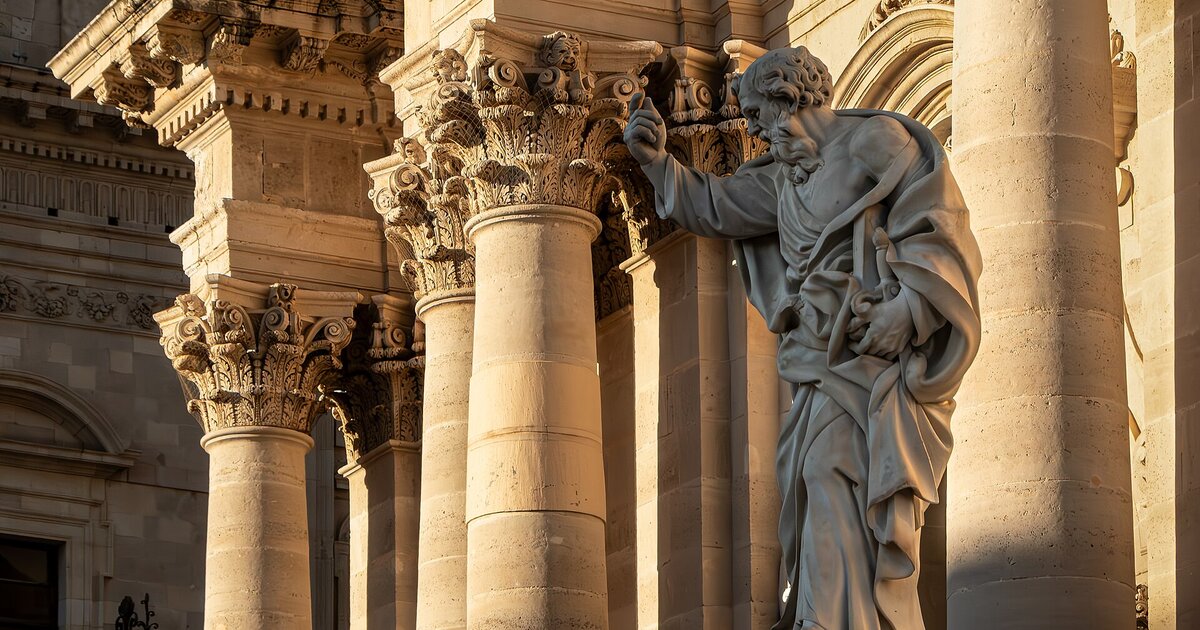
The heart of Syracuse is Ortigia, the little island of the old town connected by a bridge. Here you lose yourself among lanes of golden stone and find yourself in front of the baroque Cathedral, built literally inside an ancient Greek temple dedicated to Athena: you can still see the Doric columns embedded in the walls. Not far away is the Fonte Aretusa, a freshwater spring a stone's throw from the sea with papyrus growing wild, and the beautiful Piazza del Municipio. You can walk all of Ortigia without any hurry.
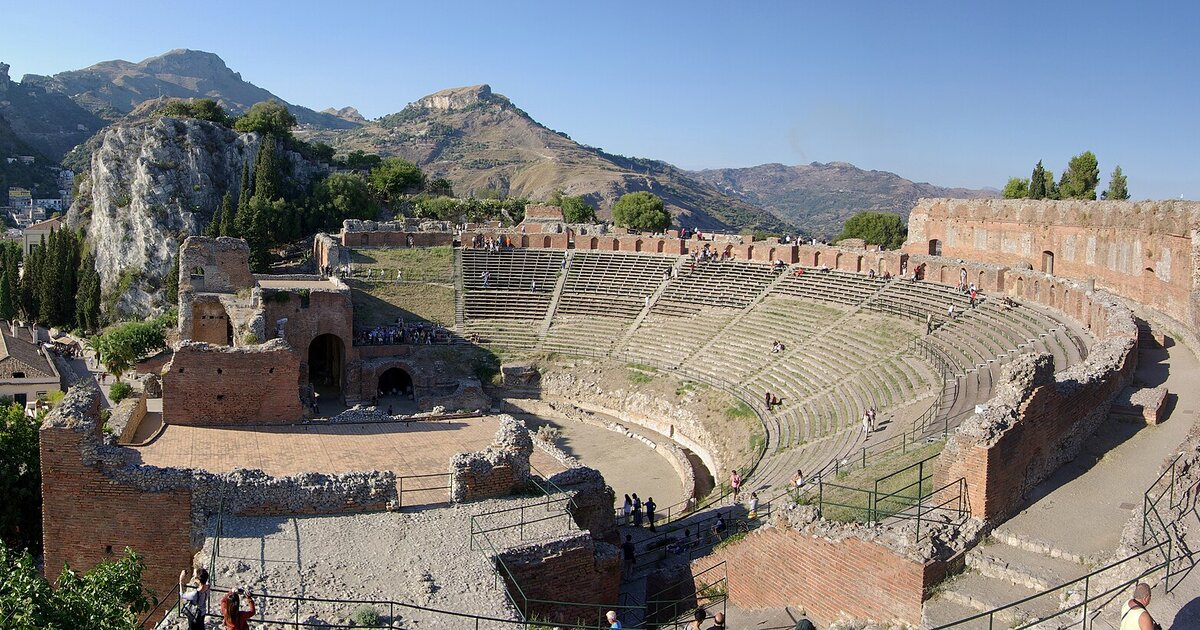
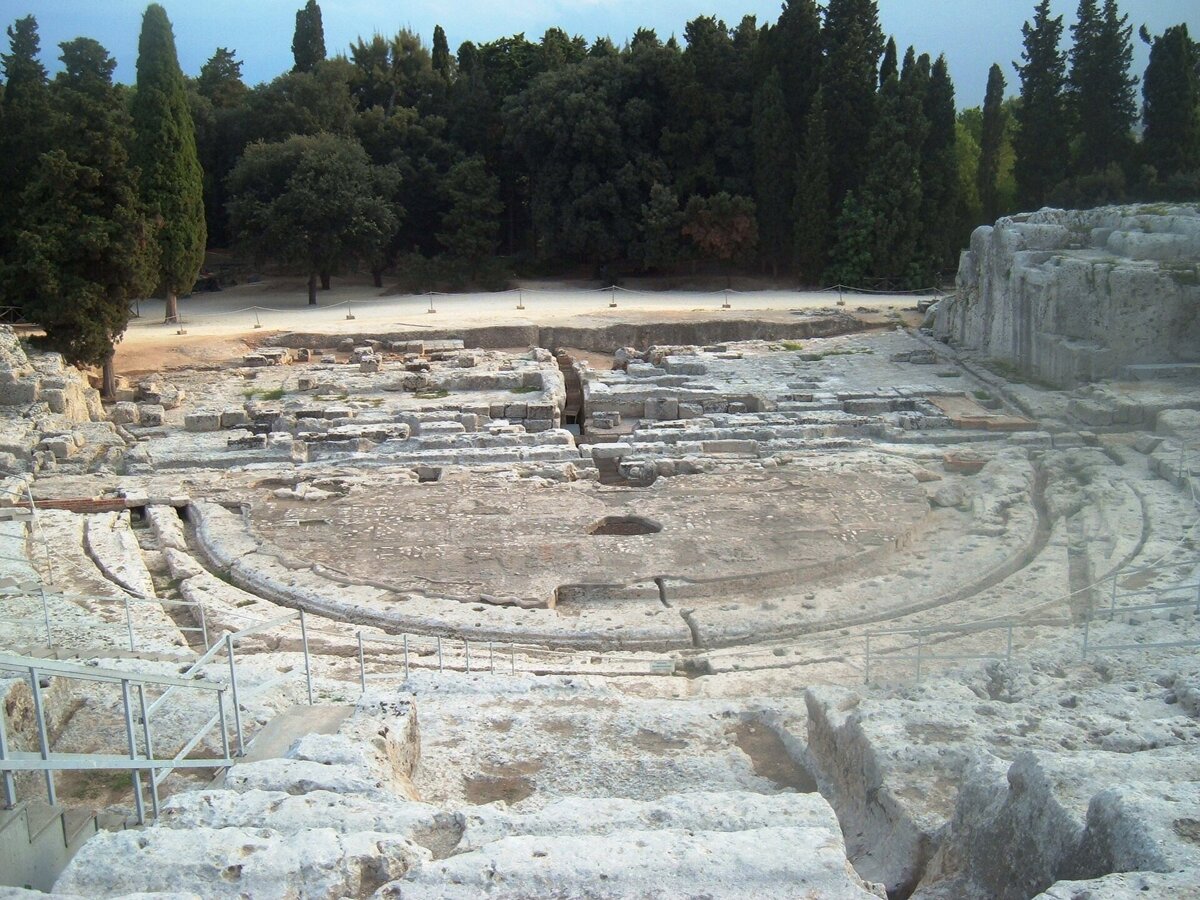
In the afternoon you move to the Neapolis Archaeological Park, where you'll find the majestic Greek Theatre, one of the largest in the ancient world, carved directly into the rock. The ticket costs about 13.50 euros and inside you'll also find the Ear of Dionysius, a cave with incredible acoustics. If you happen to come in May or June you might catch the classical performances, a show that alone is worth the price of the train ticket.
Fabio's tip
In Syracuse lunch means fish, in a trattoria in Ortigia. My trick: go without a reservation but get in by 12:30, before the groups and the tour coaches arrive. You'll find a table, have the raw red prawn and the pasta with sardines, and leave happy having spent a fair amount.
You make the trip back to Catania in the evening, at a relaxed pace, in time for a shower and maybe a gelato downtown.
Day 4: the Riviera dei Ciclopi and beaches
The short answer is this: after two intense trips, you enjoy the fourth day by the sea along the Riviera dei Ciclopi, just a few minutes from Catania.
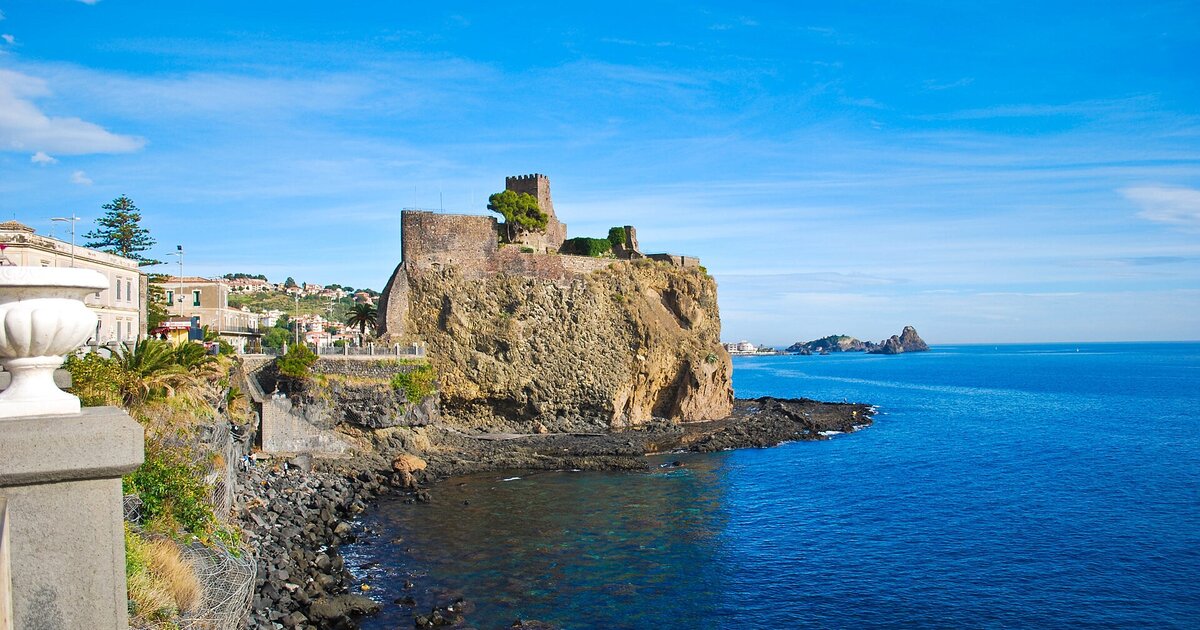
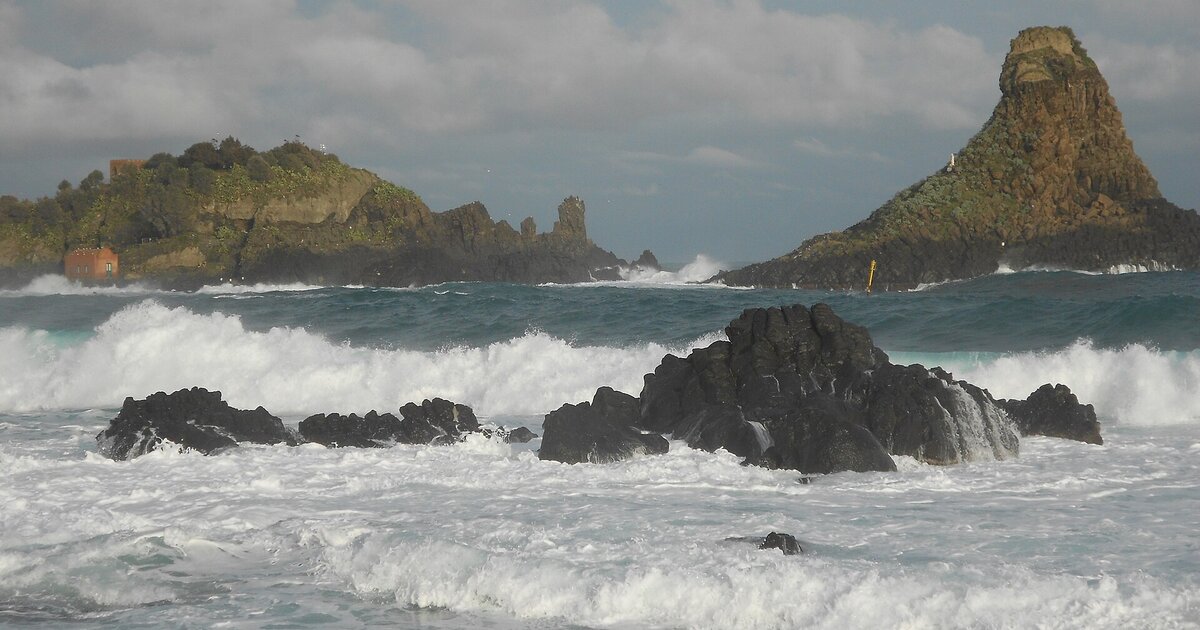
North of the city begins a stretch of coast that is pure poetry. The first village is Aci Castello, dominated by a Norman castle built on the black lava that seems to rise straight out of the sea. From there in a few minutes you reach Aci Trezza, the fishing village made famous by Verga's novel "I Malavoglia". In front of the village are the Faraglioni dei Ciclopi, the huge rocks that, according to legend, Polyphemus hurled at the fleeing Ulysses.
Here you relax: no sand, the beaches are lava rock, but the water is crystal clear and a deep blue. You bring your towel, sunbathe on the flat rocks and swim where the water is deep and cool. For lunch, of course, fresh fish in one of the restaurants on the little harbour, looking out at the Faraglioni. You get there in 20 minutes by bus from the centre, or in ten minutes by car if you've rented one.
If instead you dream of sand and equipped beach clubs, from Catania you have several options: I've covered them in depth in the guide on beaches near Catania, where you'll also find la Plaia and the coves further south.
Day 5: Val di Noto (Noto)
The short answer is this: finish in style with a day in Noto, the capital of Sicilian baroque, easily reachable by train.
Noto is about 90 km from Catania and by train it takes roughly an hour and twenty. It's one of those cities that stays with you. In 1693 a terrible earthquake razed half of eastern Sicily to the ground and Noto was rebuilt entirely from scratch, all at once, in a honey-coloured limestone that catches fire with gold at sunset. That's why they call it the baroque "garden of stone".
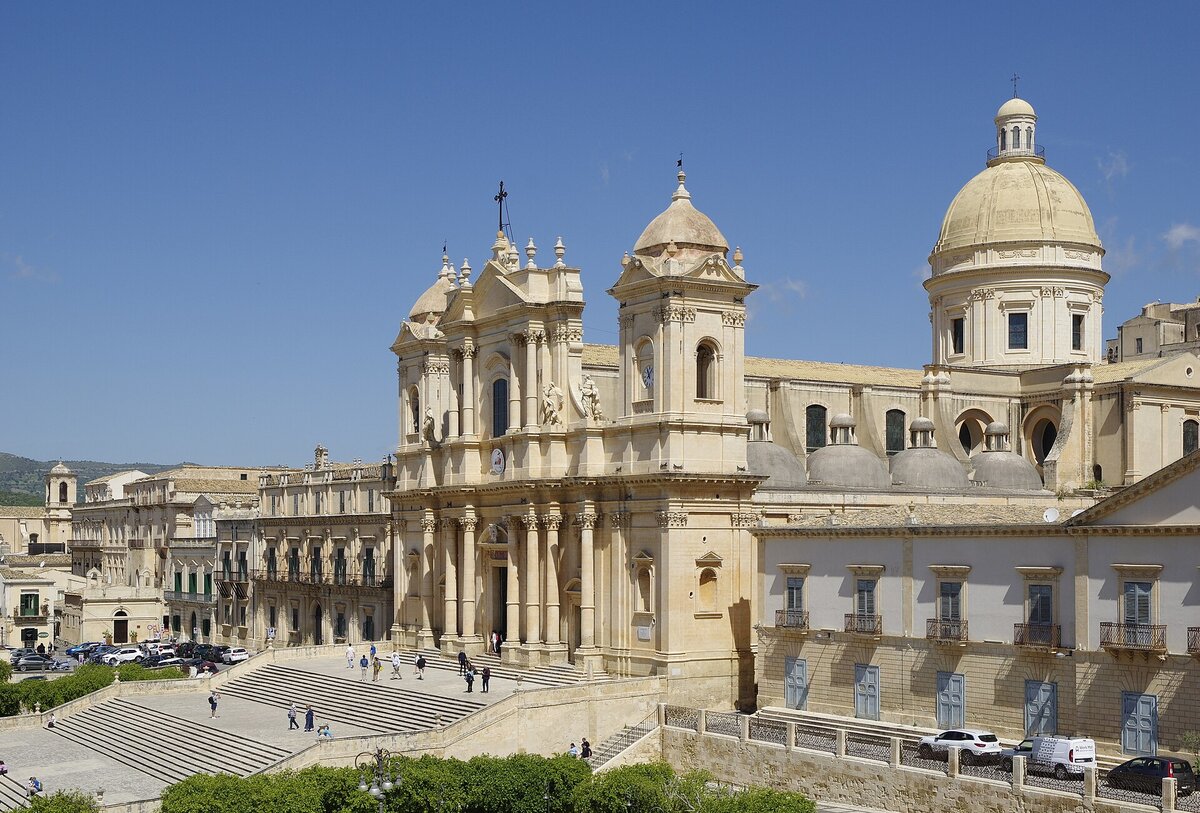
Everything revolves around Corso Vittorio Emanuele, an uphill walk lined with churches and noble palaces, each more spectacular than the last. The highlight is the Cathedral of San Nicolò, with its monumental staircase: climbing it and turning to look back down the corso is one of those postcard moments you'll remember. Lose yourself in the side streets too, to admire the baroque balconies of Palazzo Nicolaci, held up by masks, sirens and carved horses.
Fabio's tip
I'll tell you this as a Catania man who's fiercely loyal about granita: Noto has some of the best granita you'll find outside Catania. Try it with almond or, if it's the season, with mulberry. A mulberry granita and a brioche col tuppo while sitting and looking at the Cathedral is the perfect way to remember this holiday.
You head back to Catania in the afternoon or early evening, in time for a final dinner in town. Celebrate the week with a fine plate of fish or with pasta alla Norma in one of the spots in the old town: you've come full circle.
Still have one more day to spare? Then take a look at the itinerary on what to do in Catania in 6 days, where I add Taormina and the Alcantara Gorges.
Where to stay in Catania
The short answer is this: stay in the old town, because with an itinerary made of train day trips, location is everything.
I always say it to my guests: when your schedule is full of day trips, staying in the centre isn't a luxury, it's a practical choice. The Stazione Centrale, where the trains for Syracuse and Noto leave from, is a few minutes' walk away. The bus for Etna leaves from Via Etnea, also in the centre. In the morning you step out of the door, take a short walk and you're already on your way, with no shuttles, no faraway car parks, no wasting precious time.
The Lavika Loft is exactly this: an apartment in the heart of the old town, a stone's throw from Piazza del Duomo and Via Etnea. You come back in the evening after a day trip and in five minutes you're in the shower, and for dinner you have the best restaurants in town literally on your doorstep. If this way of experiencing Catania appeals to you, check the available dates and book your stay: I'll take care of giving you all the right tips for every day.
Frequently asked questions
Syracuse or Palermo: which is more worth it from Catania?
From Catania, on a five-day holiday, choose Syracuse without a doubt. It's an hour away by train, you can go and come back comfortably in a day, and between Ortigia and the Greek Theatre you have an enormous concentration of beauty. Palermo is wonderful but it's over 200 km away, on the other side of the island: it needs at least one overnight stay and only makes sense if you build a different kind of trip. For eastern Sicily, Syracuse wins hands down.
Do you need a car to visit eastern Sicily?
No, and that's the beauty of it. With this itinerary you can do everything without a car: Syracuse and Noto are reached by train from the Stazione Centrale, Etna by the AST bus from Via Etnea, the Riviera dei Ciclopi by city bus. You only rent a car if you want more freedom for the beaches or to push on to places off the network, but for the classic programme you don't need it and you save yourself car parks and restricted traffic zones.
Can Noto be done as a day trip from Catania?
Absolutely yes. Noto is about 90 km away and by train you get there in an hour and twenty. Leave in the morning, you'll have plenty of time to wander Corso Vittorio Emanuele, climb up to the Cathedral, have a granita and get back to Catania for dinner. The old town of Noto is compact and entirely walkable, so a full day is perfect.
How much does the train from Catania to Syracuse cost?
The ticket costs around 7 euros each way and the journey takes about an hour. You buy it directly at the station or online on the Trenitalia app. It's one of the cheapest and most relaxing ways to do the trip: no worrying about driving, you enjoy the scenery and step off practically in the centre of Syracuse.
Are there nice sandy beaches near Catania?
Yes. The closest and most famous is la Plaia, a long stretch of golden sand south of the city, with plenty of equipped beach clubs and free sections, reachable in a few minutes. Further south, towards the Syracuse area, you'll find even more beautiful coves and sandy beaches. The Riviera dei Ciclopi to the north, on the other hand, is lava rock: splendid water but no sand, so choose based on what you prefer.