In Catania, Sicily, you eat like a king. I say this as a host who lives here, right in the heart of the old town, welcoming guests every week who are convinced they're coming for the sea and Etna. Then they taste their first granita and realise that the food, here, is half the reason to make the trip.
It's not just a saying. In Catania food is street, market, noise. It's the warm brioche that crumbles in your hands at eight in the morning, and the smell of fish that fills the alleys before you even see it. In this guide I'll take you to eat like a true Catanese, with prices, opening times and a few tips I usually don't write down anywhere.
Catania breakfast: granita with brioche
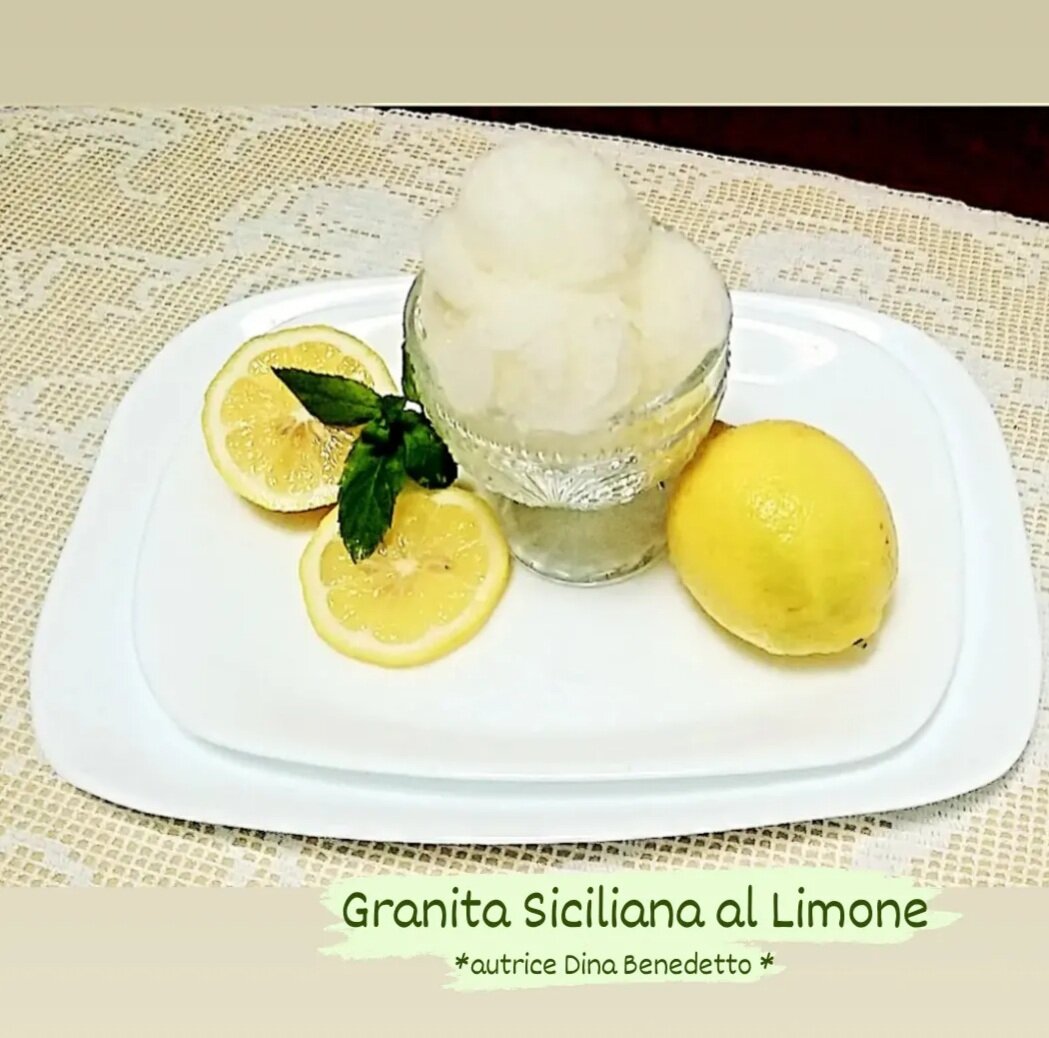
The short answer is this: in Catania breakfast means granita and brioche, and it isn't a dessert, it's a proper meal. Forget croissant and cappuccino, here in summer you start with a nice cold granita (a soft, semi-frozen iced treat) with a brioche col tuppo to go with it.
The tuppo is that little knob of brioche dough on top of the soft bun, and it's there precisely to be pulled off and dunked into the granita. The classic flavours are almond, pistacchio di Bronte (the real one, an intense green colour) and, in summer, gelso (black mulberry), which stains your fingers and makes you happy. Plenty of people order the mezzo e mezzo, two flavours in the same glass, like almond and coffee.
The price is fair: a granita with brioche costs you around 3-4 euros. For that you have breakfast sitting at a café table, with a view of the black lava-stone buildings. The cafés open early, from 7 onwards, and the best granita is the one made fresh that day, churned and creamy, not the one that's been sitting in the tub for hours.

Fabio's tip
If you come in summer, do me a favour: try the gelso (mulberry) granita. You only find it for a few weeks, when the mulberries are ripe, and it's such a dark purple it looks fake. The taste is sweet and wild at the same time, unforgettable. When the season ends, you miss it until the next year.
The arancino: why it's masculine in Catania
The short answer is this: in Catania you say arancino, masculine, and heaven forbid you call it arancina. It's one of the few things a Catanese won't compromise on, so if you want to make a good impression, trust me.
The difference isn't just grammatical. In Catania the arancino has a cone shape, a little mountain of rice that recalls Etna, which we see from our windows every day. In Palermo they make it round and call it arancina. They're two schools of thought, and here you're in cone territory.
The classic fillings are everywhere:
- Al ragù: meat, peas and tomato, the most traditional.
- Al burro: ham and mozzarella, creamy inside.
- Alla Norma: with aubergine and ricotta salata (salted ricotta), the most Catanese of all.
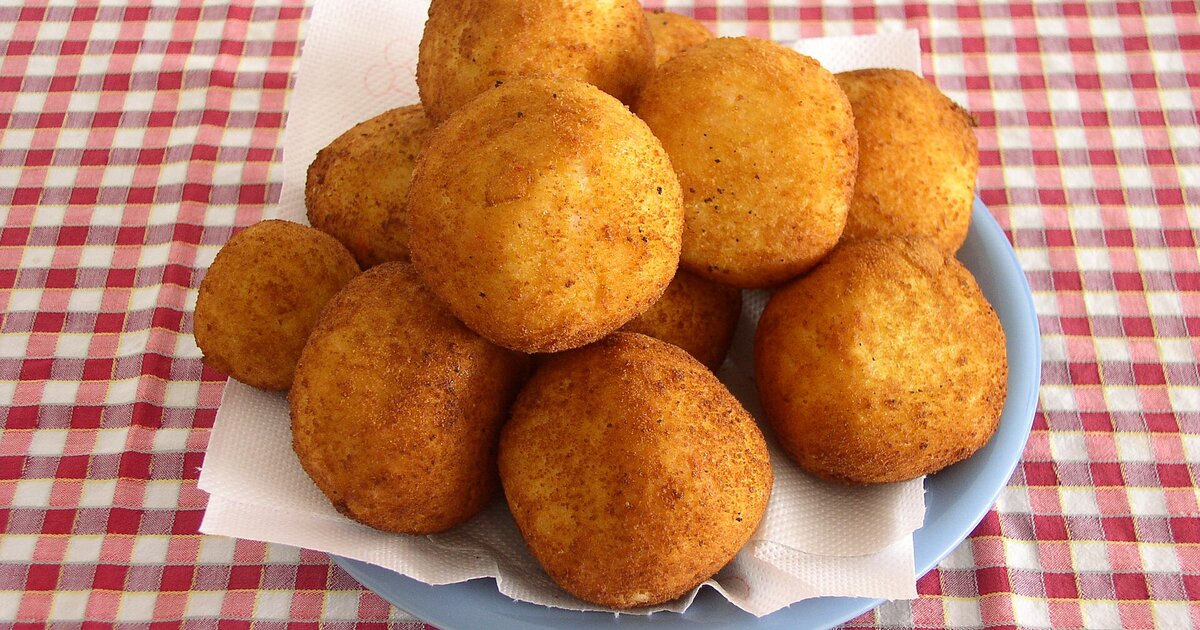
It costs little, around 2-3 euros each, and it's the perfect quick lunch if you're wandering around the centre. You grab it from any rosticceria or old-school café, they hand it to you wrapped in paper still warm, and you eat it while walking. An arancino and a cold beer, and you've sorted lunch out for five euros.
The fish market and fresh fish
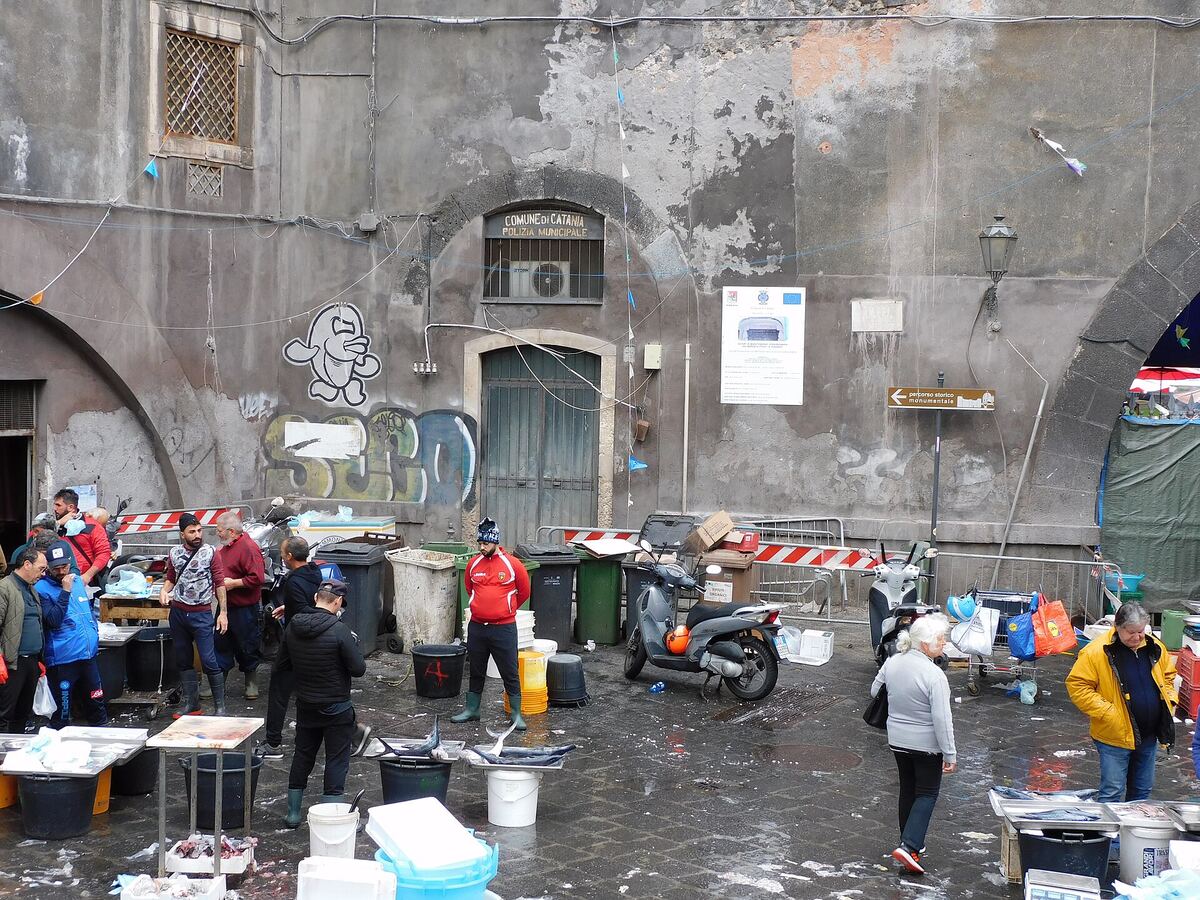
The short answer is this: la Pescheria is the fish market of Catania and it's the most genuine spectacle in the city, free and out in the open. It's a stone's throw from Piazza Duomo, and it's one of those things you have to experience at least once.
The market is open in the morning, roughly from 7 to 13, Monday to Saturday. You walk in and it all hits you at once: the fishmongers shouting prices in dialect, the stalls piled with swordfish (sword still attached), crates of silvery sardines, sea urchins split open just waiting for a teaspoon. There's a smell of brine, ice and lemon.
The lovely thing is that around the market, in the alleys, there are trattorias cooking what the market sold just a few hours earlier. You sit down at a table, order a plate of pasta with sardines or a fried mixed catch, and for a full seafood lunch you spend between 12 and 20 euros. The freshest fish, no frills, a price for locals.
Fabio's tip
Two golden rules for the fish market. One: get there by 9, when the market is still full and the fish is at its best. Two: for lunch don't look for fancy restaurants, sit down in one of the trattorias tucked into the market alleys. They're the ones with no flashy sign, with slightly rickety tables. That's where you eat the real fish.
Pasta alla Norma
The short answer is this: pasta alla Norma is Catania's signature dish, and if you only taste one in your whole life, taste it here. It's simple but perfect, and when it's made well it changes your idea of what a plate of pasta can be.
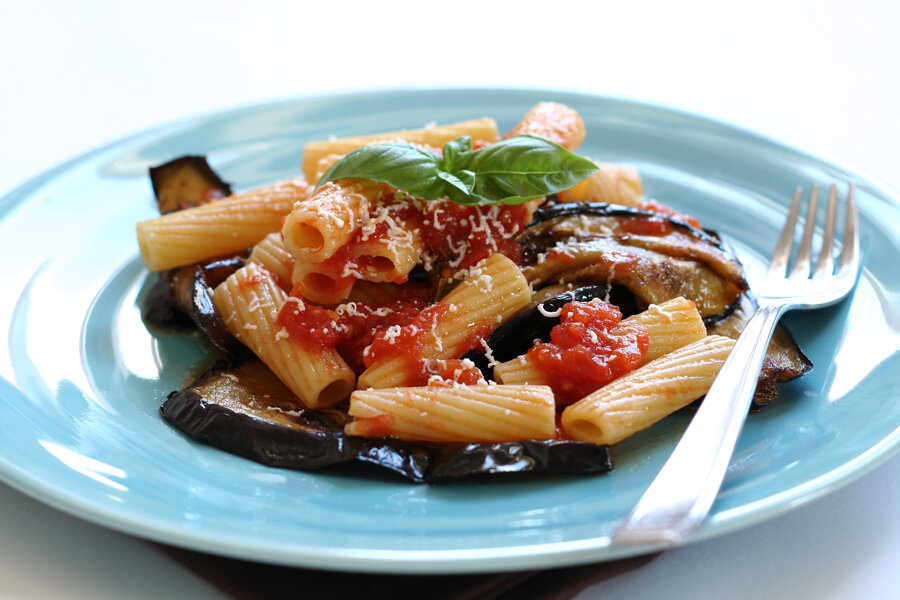
The ingredients are few and honest: tomato, fried aubergine, ricotta salata (salted ricotta) grated on top and a few leaves of basil. The aubergine has to be fried just right, soft but not greasy, and the salted ricotta gives that savoury touch that ties it all together. It's usually made with maccheroni or rigatoni.
The name has a lovely, very Catanese story. They say it comes from Norma, the opera by the composer Vincenzo Bellini, who was from Catania himself. The story goes that, faced with this dish, someone exclaimed it was a real Norma, meaning a masterpiece, like the maestro's opera. True or legend, here we believe it, and eating a Norma becomes a little tribute to the city.
The sweets: cannoli, minne di Sant'Agata, cassata
The short answer is this: Catania's sweets are ricotta, ricotta and more ricotta, and they're as much a part of the city's identity as pasta alla Norma. If you have room after lunch (and you must find it), these are the three to try.
The cannolo (a crisp fried tube of pastry) is king. A crunchy shell, filled with fresh sweetened sheep's milk ricotta, with candied orange peel or chocolate chips at the ends. There's only one secret, and I'll explain it right below.
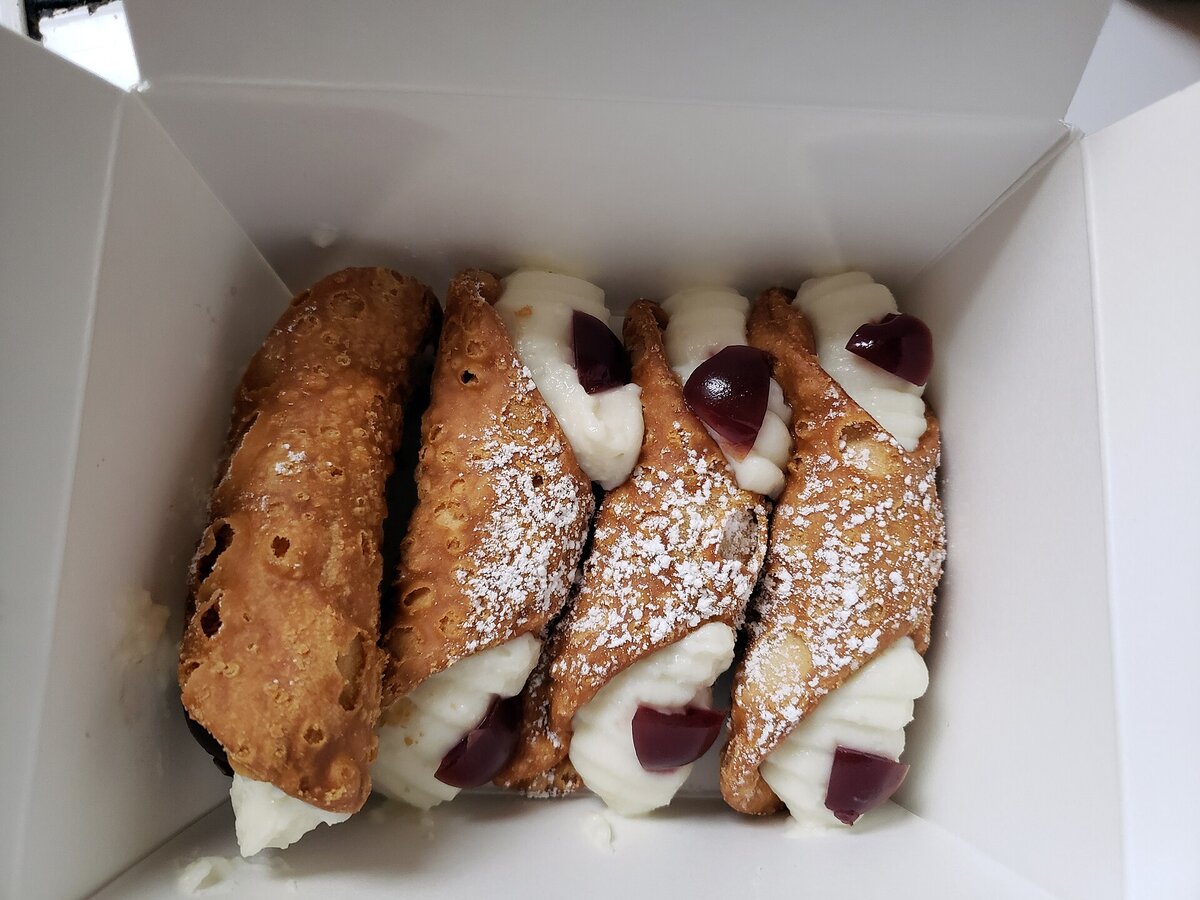
Then there are the minne di Sant'Agata, also called cassatelle, linked to Catania's patron saint. They're small white domes with a candied cherry on top, filled with ricotta, and they were created as a tribute to the martyr Saint Agatha. You can find them all year, but they fly off the shelves in February, during the saint's festival, one of the biggest in the world.
Finally the cassata, the Sunday sweet: sponge cake, ricotta, green marzipan and a cascade of colourful candied fruit. It's rich, showy, important. One slice is more than enough, but it's one of those sweets that look like a celebration just sitting there.
Fabio's tip
The rule of the perfect cannolo: it has to be filled to order, right in front of you. If you see it already made and lined up neatly in the display case, give it a miss. The shell soaks up the moisture from the ricotta and goes soggy, and a soggy cannolo is a sad thing. Look for the places that pipe the filling in with a sac à poche when you order. That's the cannolo that makes you understand why everyone talks about them.
Where to eat all this near the centre
The short answer is this: in Catania you don't have to go far, the best food is all within reach of the old town. And that's also part of why I love being here at Lavika Loft, because in a ten-minute walk you reach pretty much everything.
The fish market and Piazza Duomo are the city's hungry heart: there you have the fish market, the seafood trattorias and the historic cafés for granita. Heading up towards via Etnea, the main street, you find the classic pastry shops for cannoli and cassata and loads of spots for a quick arancino.
For nightlife, aim for the neighbourhood around piazza Teatro Massimo and the alleys of the movida, where dinner is late and the drinks go on until the small hours. If you want to organise your days well between food and sightseeing, here are a few guides I've written:
- For the monuments and neighbourhoods not to miss, read what to see in Catania.
- If you're short on time, take a look at what to do in Catania in 2 days.
- For a quick getaway, I recommend my itinerary for a weekend in Catania.
And if just reading this has made you hungry, the best way to live all of it is to sleep in the heart of the city: take a look at the availability of Lavika Loft and come and eat with us.