Catania, Sicily: a city of black stone and wide skies, spread out at the foot of Etna as if the volcano had put it there on purpose. I've always lived here and I host travellers at the Lavika Loft, right in the heart of the old town, and every time someone asks me what to see I get the urge to lace up my shoes and walk them around myself.
Catania is a Baroque city, rebuilt after the earthquake of 1693 and today part of the UNESCO World Heritage Site together with the other towns of the Val di Noto. It's made of dark palaces, huge squares, churches that leave you open-mouthed and a fish market that is an open-air show. In this article I'll tell you what not to miss, with opening times, prices and a few tips that only someone who lives here can give you.
Piazza del Duomo and the Fontana dell'Elefante
If you ask me where to start, the short answer is this: Piazza del Duomo. It's Catania's living room, the point where everything comes together. You sit down for a moment, look up, and you immediately understand you've arrived.
In the middle of the square stands the Fontana dell'Elefante, which we Catanesi affectionately call "u Liotru". It's a little elephant carved from black lava stone with an Egyptian obelisk on top, and it's the symbol of the city. Legend says it brings good luck, so you absolutely have to take a photo of it.
Looking onto the square is the Cathedral of Sant'Agata, dedicated to the patron saint of Catania. Entry is free and inside you'll also find the tomb of the composer Vincenzo Bellini, who was from Catania. The facade in white marble and black stone is one of the finest examples of Sicilian Baroque you'll see. Go early in the morning or in the late afternoon, when the light cuts across the square at an angle: it's the most beautiful moment.
The fish market: Catania's Pescheria
Just a few steps from Piazza del Duomo, you go down a few stairs and end up right inside the Pescheria, Catania's fish market. It isn't just a tourist stop: it's the beating heart of the city, a theatre of voices, colours and smells that sweeps you up.
The fishmongers shout out the prices in dialect, the stalls overflow with swordfish, tuna, red prawns, sea urchins and mussels still wet from the sea. Just walk among the stalls for five minutes and you'll take home a piece of the real Sicily. The market is open roughly from 7 to 13, and on Sunday afternoon it's closed (Sunday morning is scaled back, so don't count on it too much).
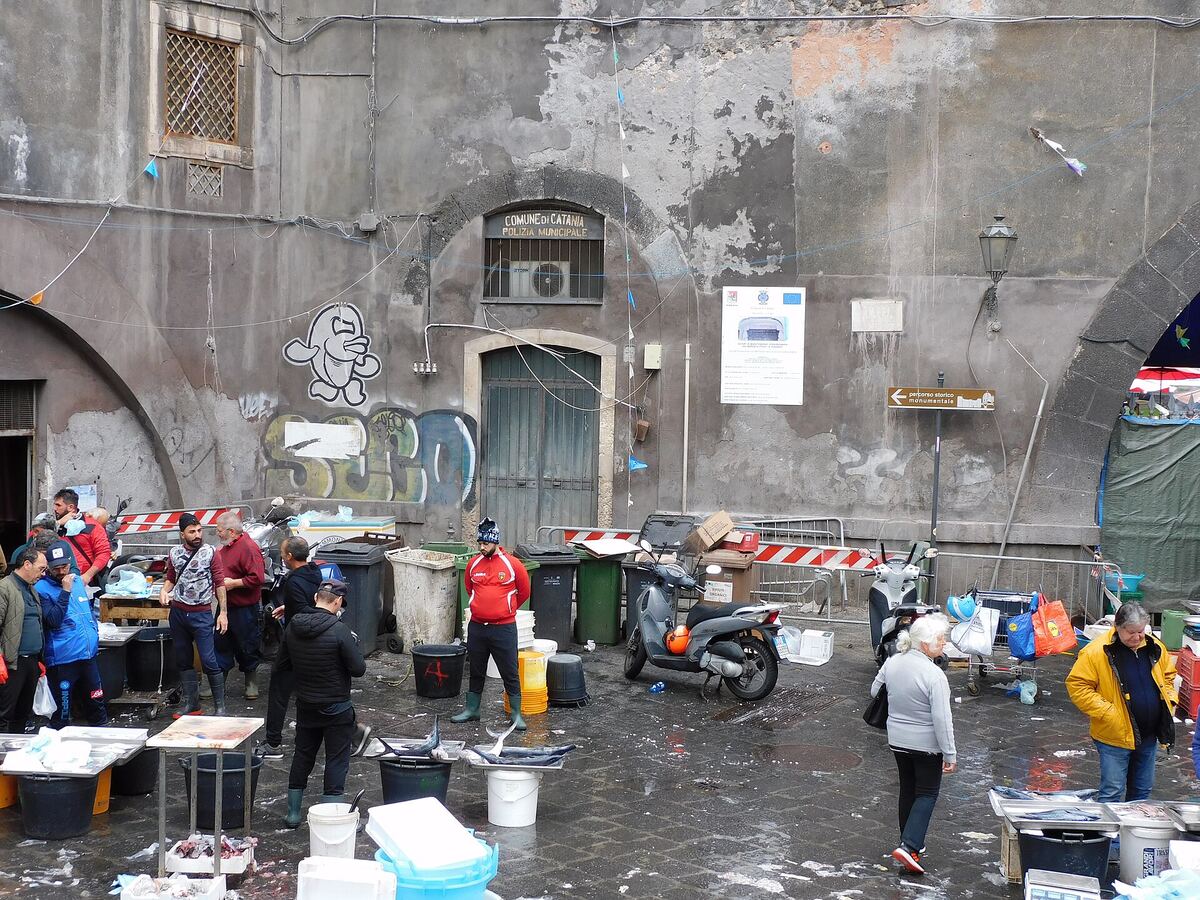
All around the Pescheria you'll find trattorias and stalls that cook the fish for you on the spot: a fried-fish sandwich, a plate of pasta with sardines, or raw seafood if you're brave. It's the right place for a fish lunch in Catania with no frills and at honest prices.

Fabio's tip
Here's the most important tip in the whole article: go to the Pescheria by 9 in the morning. After that the market starts to empty out, the best fish has already been sold and you miss half the show. Early on the air is fresher too, and there's that wonderful chaos that is the real reason you go.
The Benedictine Monastery
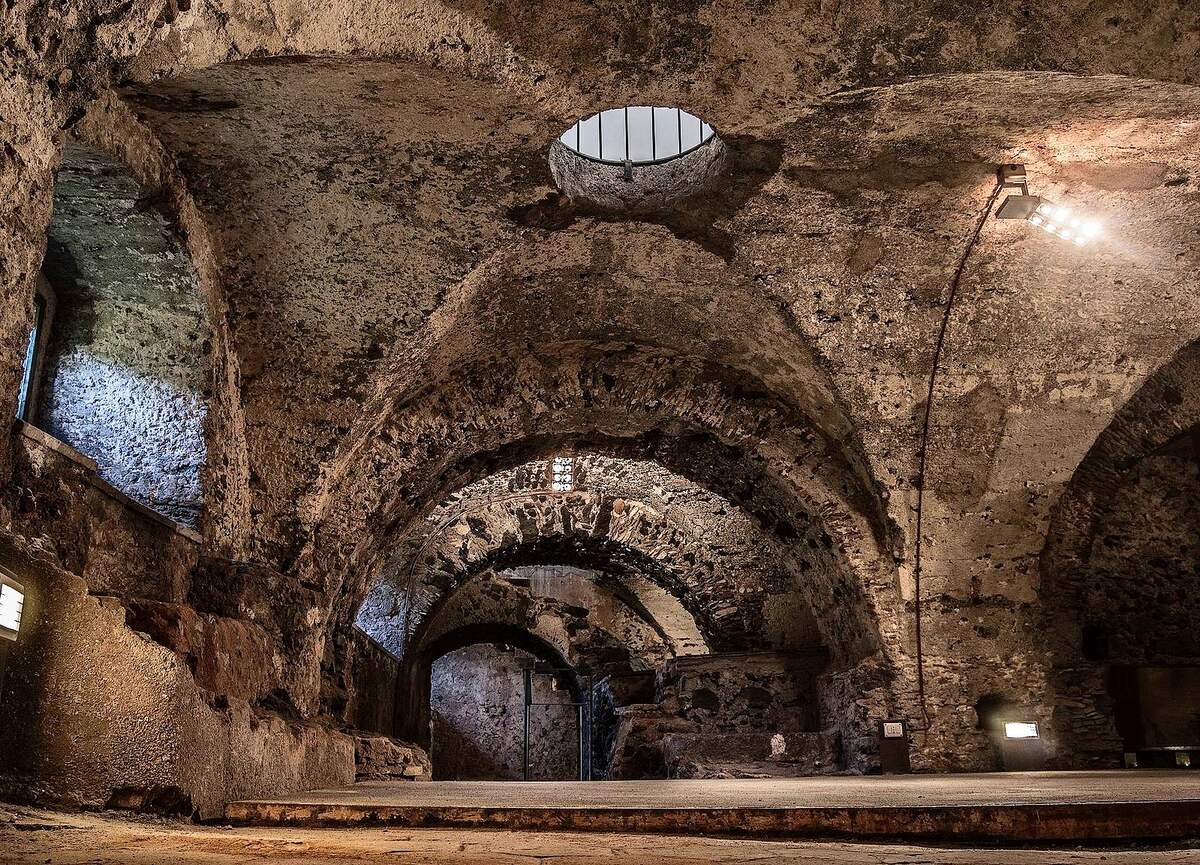
This is one of those places people often forget to visit, and they're making a big mistake. The Benedictine Monastery of San Nicolò l'Arena is one of the largest Benedictine complexes in Europe, a kind of city within the city, built on top of a lava flow and then rebuilt after the earthquake.
Today it's home to the Department of Humanities of the University of Catania, so it's a living monastery, full of students, but with cloisters, gardens and ancient rooms that take you travelling through time. You visit it with a guided tour (it starts from around 10 euros and lasts about an hour and a half) that takes you into the monumental kitchens, onto the rooftops and into the archaeological digs beneath the floor.
Fabio's tip
Book the Benedictine tour online the same morning: spots run out, especially on weekends and in high season, and turning up there without a booking often means being left outside. It only takes two minutes on your phone while you have breakfast.
Castello Ursino and Via dei Crociferi
Want a piece of medieval Catania, from before the Baroque? Then head to Castello Ursino. It's a fortress built by Frederick II of Swabia in the 13th century, with its round towers and mighty walls. It once stood by the sea, then the lava flow of 1669 pushed it hundreds of metres from the coast: today it's surrounded by the city.
Inside is the Museo Civico, with paintings, archaeological finds and temporary exhibitions. The ticket costs around 6 euros and it's usually open from 9 to 19 (always check the closing day, generally one early in the week).
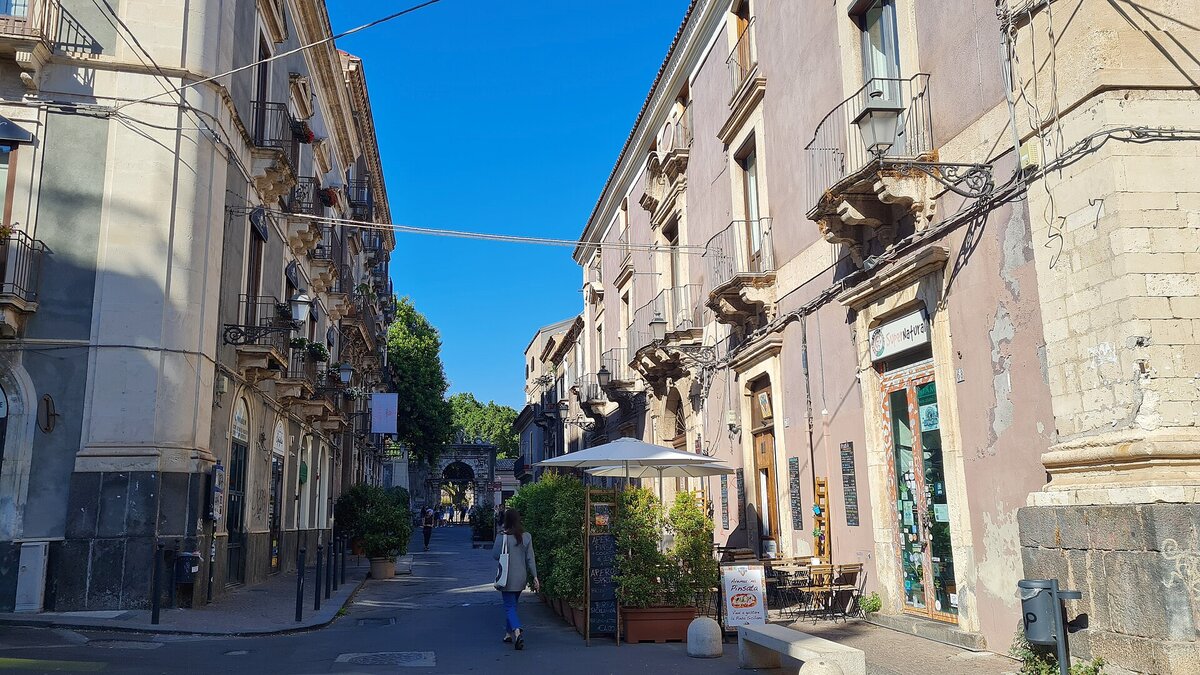
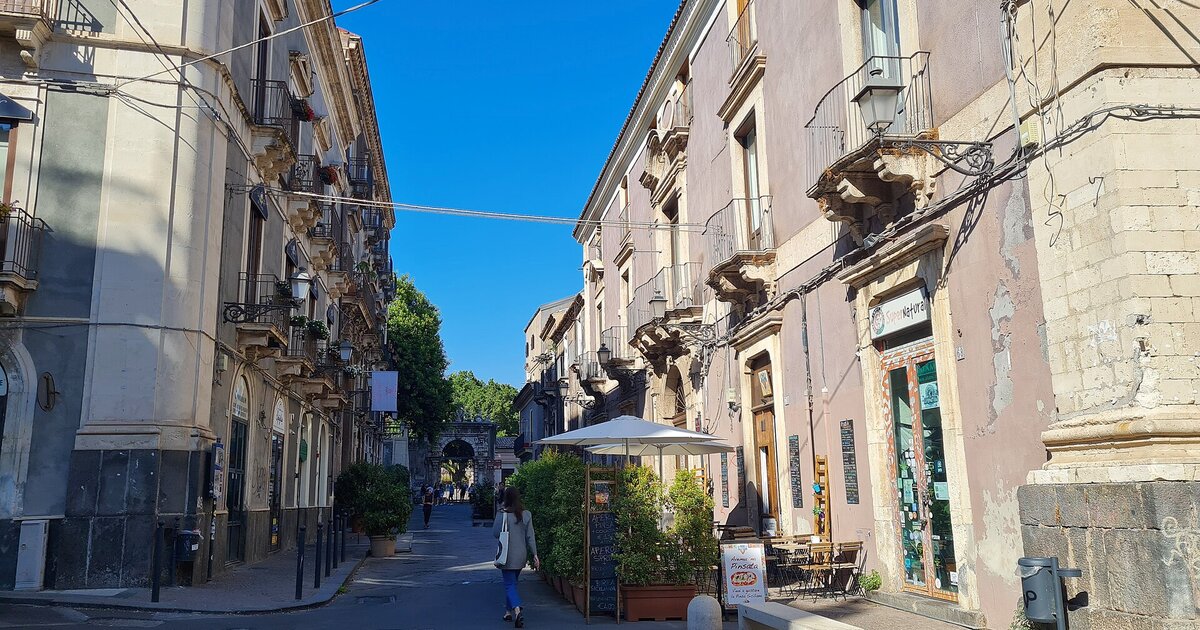
A few minutes' walk away the atmosphere changes completely and you find yourself in Via dei Crociferi, the Baroque street par excellence. In little more than a hundred metres, churches, convents and monumental arches face one another one after the other: it's one of the most scenic stretches of Catania's UNESCO World Heritage Site. Walk it slowly, lift your gaze to the bell towers and imagine the city being reborn after the earthquake. In the evening, with the lighting, it's even more striking.
Via Etnea and Villa Bellini
Via Etnea is Catania's main street, long and straight, the one where the Catanesi do the "struscio", their evening stroll. It starts from Piazza del Duomo and climbs north, and if you turn at the right moment, at the end of the street you can see Etna peeking out between the buildings. It's one of those views that stays with you.
Along Via Etnea you'll find shops, historic cafés, pastry shops and the most beautiful squares in the centre, like Piazza Università and Piazza Stesicoro with the remains of the Roman amphitheatre. It's the perfect place for a granita with a brioche mid-morning, which is practically a duty when you're in Catania.
When you need a break from the traffic and the sun, slip into Villa Bellini, the city's most beloved public garden. Pathways, palm trees, fountains, a little rise from which you look out over the rooftops: it's the green lung where the Catanesi come to breathe. Half an hour sitting on a bench here and you set off recharged.
Etna: the number one attraction
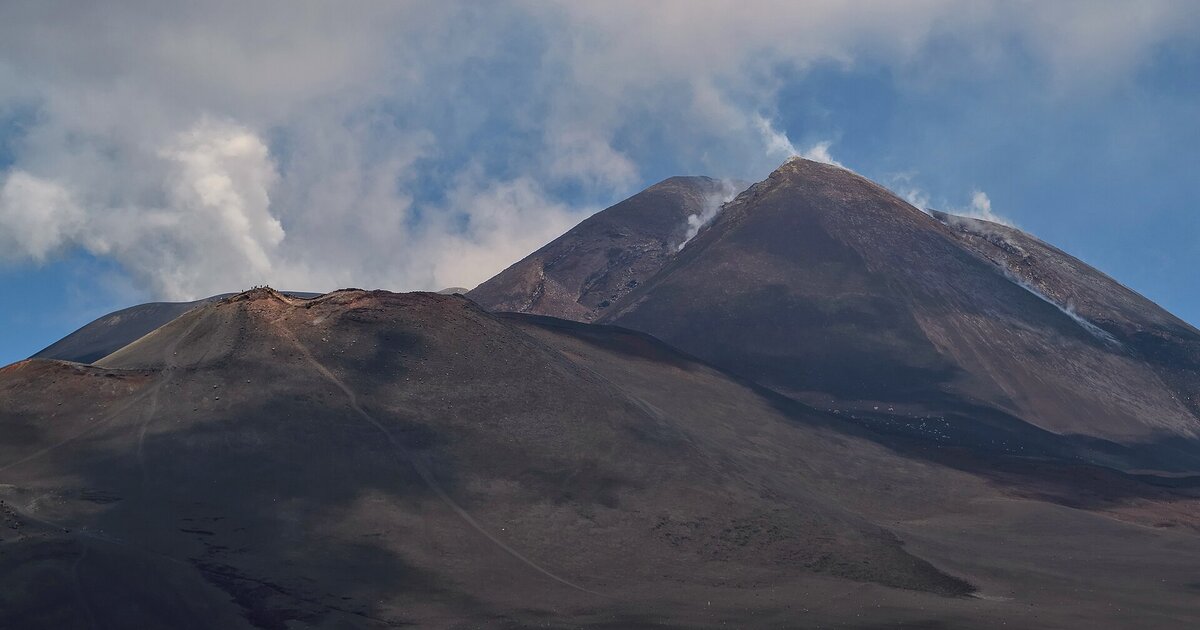
If I'm honest, the number one attraction of Catania isn't even inside Catania: it's Etna. The highest active volcano in Europe, towering at around 3,300 metres and dominating every view of the city. People watch it smoke from the window as if it were the most normal thing in the world, and in fact for us it is.
The wonderful thing is that you can reach Etna on a day trip, setting off from the city centre. In a little over an hour by car you arrive at Rifugio Sapienza, at about 1,900 metres, from where you set off to climb even higher by cable car and off-road vehicles, or you walk the trails among the extinct craters and the flows of black lava.
It's an experience that completely changes your idea of Sicily: you go from the sea to a lunar landscape in an hour. I've written you a dedicated article with all the details on times, costs and how to organise yourself, so take a look at the Etna excursion from Catania before you set off.
If instead you have more time and want to fit in city, sea and Etna properly without rushing, I recommend reading the guide on what to do in Catania in 3 days: it's the best way not to miss anything.
Frequently asked questions
What to see in Catania in one day?
The short answer is this: start from Piazza del Duomo with the Fontana dell'Elefante and the Cathedral of Sant'Agata (free entry), then go down to the Pescheria by 9 for the fish market. Mid-morning, head back up along Via Etnea for a granita, visit the Benedictine Monastery with a guided tour and finish with a walk along Via dei Crociferi and a break at Villa Bellini. In one full day you can do it without rushing, all on foot.
How much do Catania's attractions cost?
Many of the most beautiful things are cheap or free. The Cathedral of Sant'Agata has free entry, Castello Ursino with the Museo Civico costs around 6 euros, the Benedictine Monastery tour starts from around 10 euros. The Pescheria, Via Etnea, Via dei Crociferi and Villa Bellini are all free. For less than 20 euros each you see practically the whole centre.
Can you get around the centre of Catania on foot?
Yes, and it's the best way to experience it. The old town is compact: from Piazza del Duomo you reach the Pescheria in two minutes, Castello Ursino in about ten and the Benedictine Monastery in a quarter of an hour's walk. Via Etnea is a long straight street perfect for strolling. Put on comfortable shoes, because the lava stone is lovely but a little uneven.
What to see in Catania when it rains?
If it rains, don't worry, you have plenty of indoor options. The Benedictine Monastery tour keeps you busy for about an hour and a half under cover, the Museo Civico at Castello Ursino is perfect for an afternoon, and you can visit the Cathedral of Sant'Agata and the many Baroque churches in the centre. On top of that, a round of the historic cafés on Via Etnea with coffee and cannoli makes even a grey day pleasant.
Is it worth going up Etna from Catania?
Absolutely yes, for me it's the number one experience. Etna is the highest active volcano in Europe, at around 3,300 metres, and you reach it on a day trip setting off from the centre: in a little over an hour you arrive at the base and then climb by cable car, off-road vehicle or on foot. Bring a jacket even in summer, because at high altitude it's cool. You'll find all the details in the dedicated article on the Etna excursion.
Catania is a city that gets under your skin slowly: the black stone, the volcano in the background, the voices of the market, the Baroque all around you. If you're thinking of coming to discover it at a leisurely pace, take a look at the availability at the Lavika Loft and make your base in the old town, a stone's throw from everything I've told you about. I'll be waiting for you.